7 Signs the Real Estate Market Is Shifting Between a Buyer’s Market and a Seller’s Market

The real estate market is always in flux, and knowing whether it’s shifting from a buyer’s market (favoring buyers) to a seller’s market (favoring sellers), or vice versa, can give you a strategic edge. Here are seven key signs to watch in 2025 to spot these transitions.
1. 🏘️ Changes in Home Inventory Levels
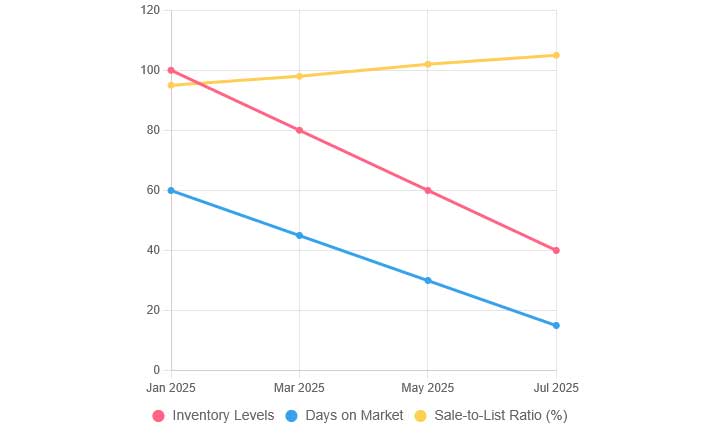
In a buyer’s market, there’s an oversupply of homes, giving buyers more choices and negotiating power. If inventory starts shrinking,fewer homes listed or faster sales,it’s a sign of a shift to a seller’s market. Conversely, rising inventory signals a move back toward a buyer’s market. Check local MLS data or platforms like Redfin for trends.
2. ⏳ Shifts in Median Days on Market
Homes lingering on the market for weeks or months indicate a buyer’s market, as sellers compete for fewer buyers. If days on market decrease, with homes selling in days, it’s tilting toward a seller’s market. A lengthening sales timeline suggests the opposite. Track this via Zillow or local real estate reports.
3. 💰 Fluctuations in Sale-to-List Price Ratios
In a seller’s market, homes often sell at or above asking price, with sale-to-list ratios near or exceeding 100%. In a buyer’s market, ratios dip below 100%, as buyers negotiate discounts. A rising ratio signals a shift to a seller’s market; a falling ratio points to a buyer’s market. Your agent can provide local data on this metric.
4. 🔥 Increase or Decrease in Bidding Wars
Frequent bidding wars, where multiple offers drive up prices, mark a seller’s market. If bidding wars become rare and offers sit without competition, it’s shifting to a buyer’s market. Watch X for posts from local agents or buyers sharing their experiences to gauge this trend.
5. 📈 Interest Rate Movements
Rising interest rates can cool a seller’s market, reducing buyer demand and shifting toward a buyer’s market as affordability drops. Falling rates often heat up demand, tipping the scales toward a seller’s market. Monitor rate trends through financial news or sites like Bankrate.
6. 🤝 Seller Concessions Becoming More or Less Common
In a buyer’s market, sellers often offer concessions like closing cost assistance or repairs to attract buyers. If concessions dry up and sellers hold firm on terms, it’s a sign of a seller’s market emerging. Conversely, increasing concessions indicate a buyer’s market. Ask your agent for insights on local negotiation trends.
7. 😊 Shifts in Buyer and Seller Confidence
Market sentiment drives behavior. In a seller’s market, buyers act quickly, fearing they’ll miss out, while sellers feel confident rejecting low offers. In a buyer’s market, buyers take their time, and sellers are more open to negotiations. Check local real estate forums or social media like X for chatter on buyer and seller attitudes.
Stay Ahead of the Market
Recognizing these signs can help you time your next move, whether buying or selling. Work with a local real estate expert, like me, to monitor these trends and act strategically.